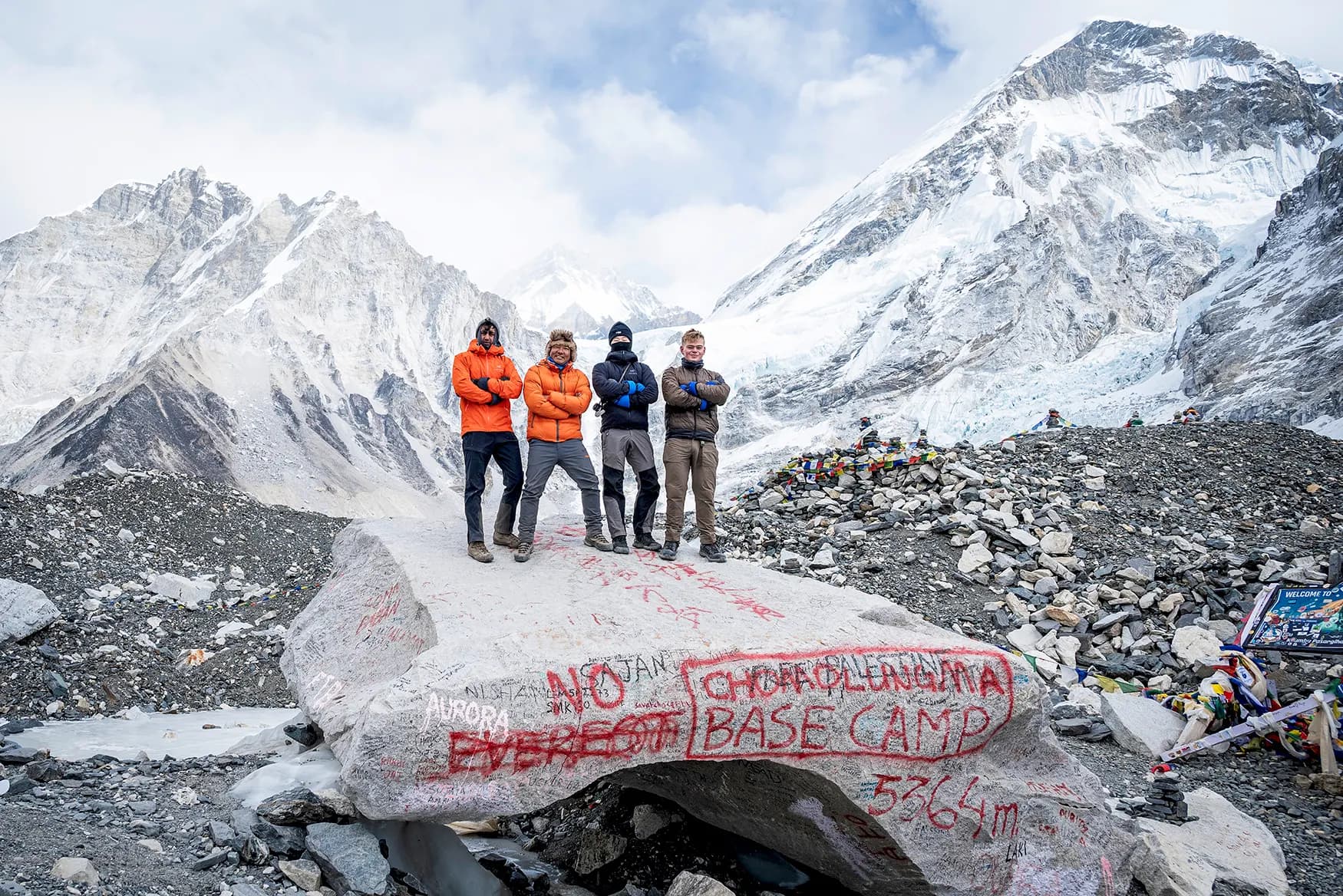
The Everest Base Camp Trek is more than a trek to one of the most famous places in the Himalayas. It is a journey through spectacular mountain landscapes, ancient Buddhist traditions, welcoming Sherpa villages, dramatic suspension bridges, glaciers and some of the most inspiring scenery in Nepal. For travellers from around the world, walking toward Mount Everest is a dream that represents adventure, courage and the desire to experience something truly extraordinary.
Standing at 8,848.86 metres, Mount Everest is the highest mountain in the world. Yet you do not need to climb its summit to feel its power. The Everest Base Camp Trek takes you deep into the Khumbu region of Nepal, where the mountains gradually become larger with every step. From the first exciting flight into Lukla to the final approach toward Everest Base Camp, the journey itself becomes the greatest part of the adventure.
About Everest Base Camp
Everest Base Camp is the famous expedition base on the Nepal side of Mount Everest. At approximately 5,364 metres, it sits beside the spectacular Khumbu Glacier and beneath an incredible collection of Himalayan peaks. For trekkers, reaching Base Camp is an achievement rather than a climbing expedition. You walk the same broad Himalayan landscape used by mountaineers preparing for their Everest attempts, surrounded by glaciers, ice-covered mountains and the enormous walls of the Khumbu region.
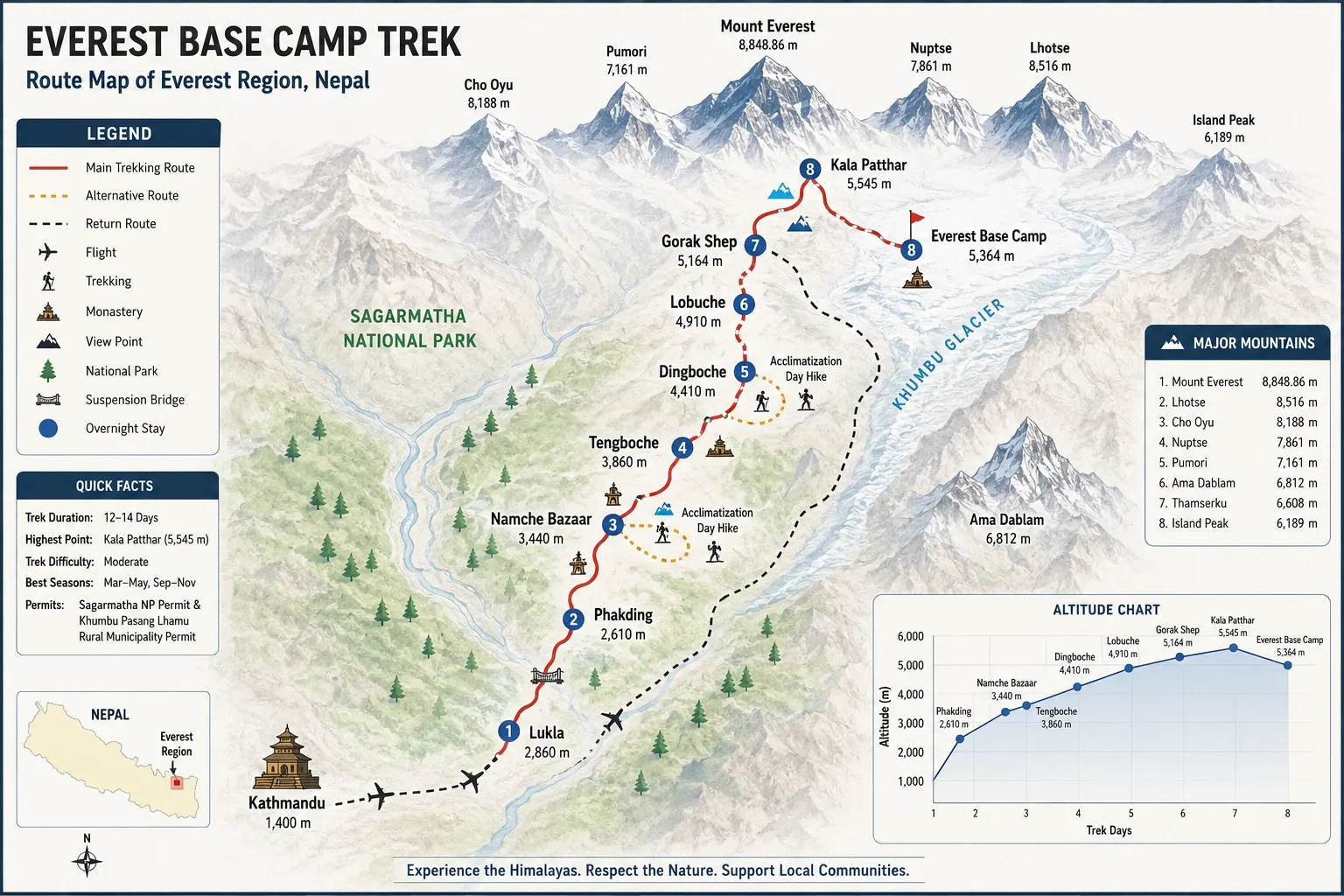
The classic trek begins at Lukla and follows the Dudh Koshi Valley toward Namche Bazaar before continuing through Tengboche, Dingboche, Lobuche and Gorak Shep. From Gorak Shep, trekkers make the final journey to Everest Base Camp. Nepal Tourism Board describes the Everest region as a major destination for trekking, mountaineering, Himalayan scenery, Sherpa culture and Buddhist heritage.
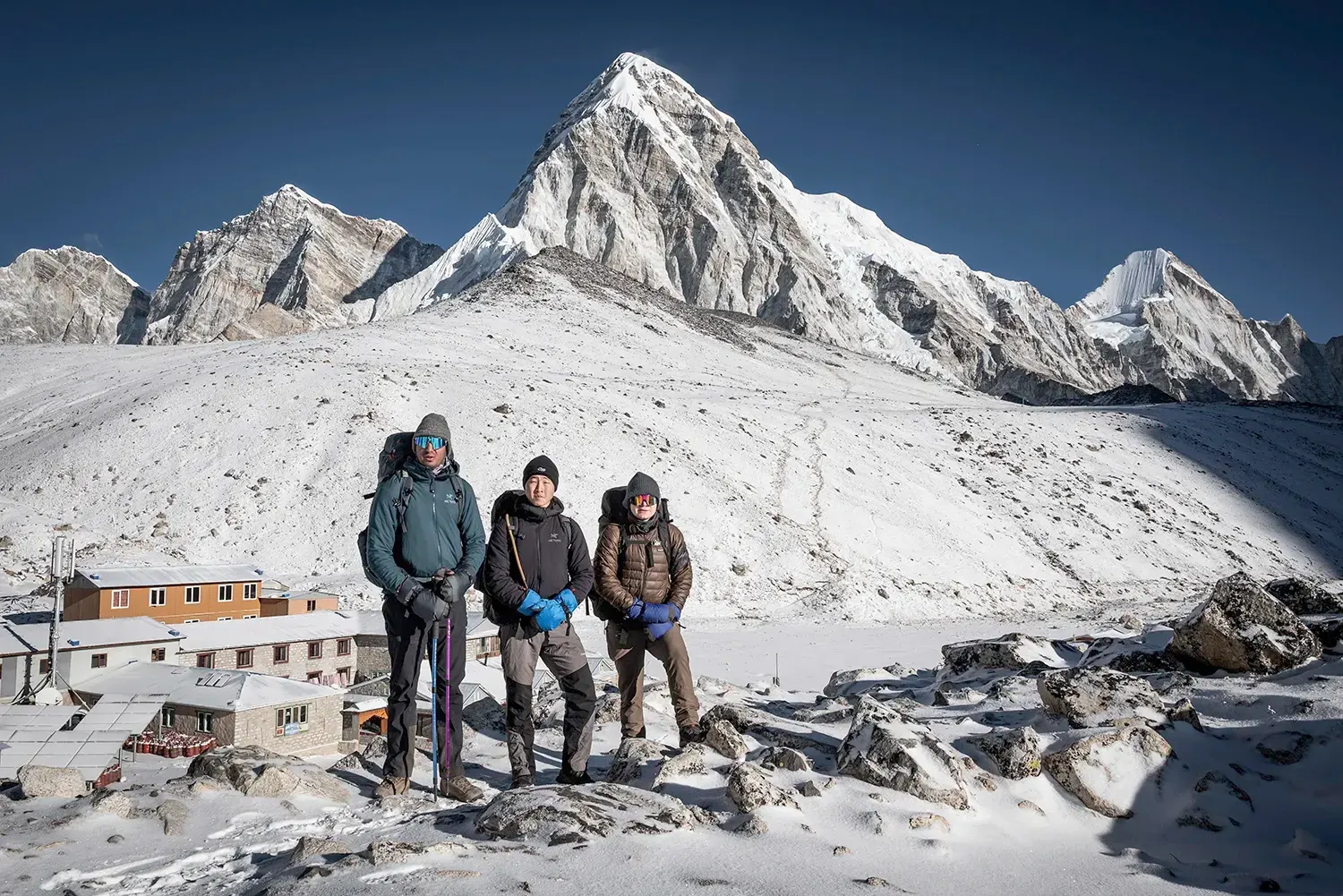
But Base Camp is not necessarily where you get the best view of Everest itself. For the classic panoramic view, trekkers usually climb Kala Patthar, which rises to approximately 5,545 metres. From its summit, Everest, Nuptse, Pumori, Ama Dablam and the surrounding peaks create one of the most unforgettable mountain panoramas in Nepal.
Why Everest Base Camp Is So Popular
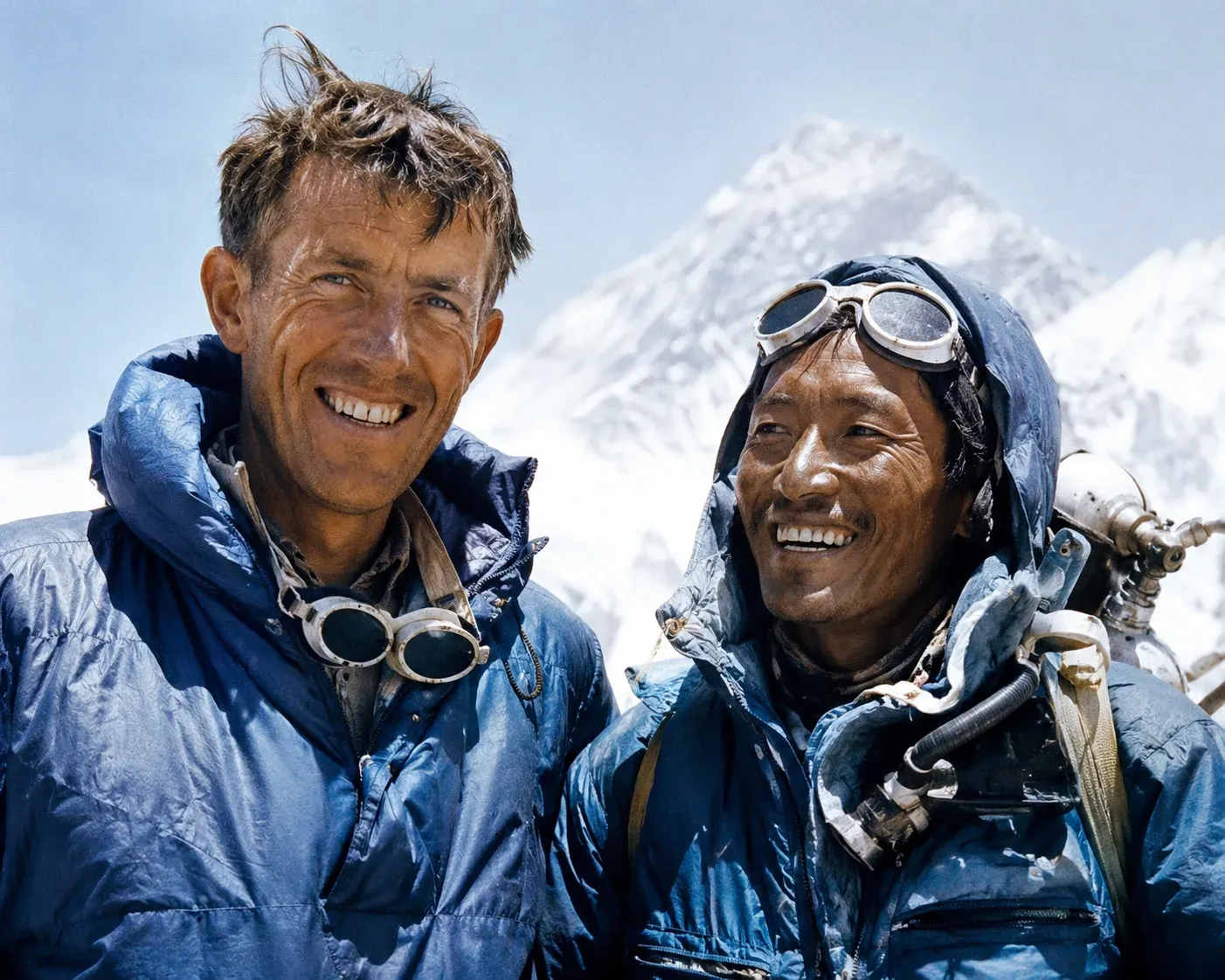
The popularity of the Everest region is closely connected with the history of mountaineering. When Tenzing Norgay Sherpa and Sir Edmund Hillary successfully reached the summit of Everest on 29 May 1953, their achievement captured the imagination of people around the world. Everest became a symbol of exploration and human determination, and Nepal's Khumbu region gradually became one of the world's most famous adventure destinations.
But the Everest Base Camp Trek became popular for another important reason: travellers discovered that they could experience the incredible world of Everest without climbing the mountain itself. A person with good preparation and determination can walk through the same remarkable Himalayan environment, visit Sherpa communities and monasteries, and stand beneath the world's highest peak.
Today, the Everest region attracts tens of thousands of visitors, although the exact number depends on whether statistics refer to Sagarmatha National Park visitors, trekkers, climbers or all tourism activity in the region. Official Nepal tourism statistics have recorded tens of thousands of foreign visitors to Sagarmatha National Park in individual years, while the park itself continues to be one of Nepal's major Himalayan attractions.
The Sherpa People of Everest
The Sherpa people have a deep cultural and historical connection with the Khumbu. Their communities have developed around the difficult environment of the high Himalayas, and their traditions are strongly influenced by Tibetan Buddhism. As you walk through the region, you can see this heritage in monasteries, prayer flags, mani walls, chortens, traditional houses and religious ceremonies.
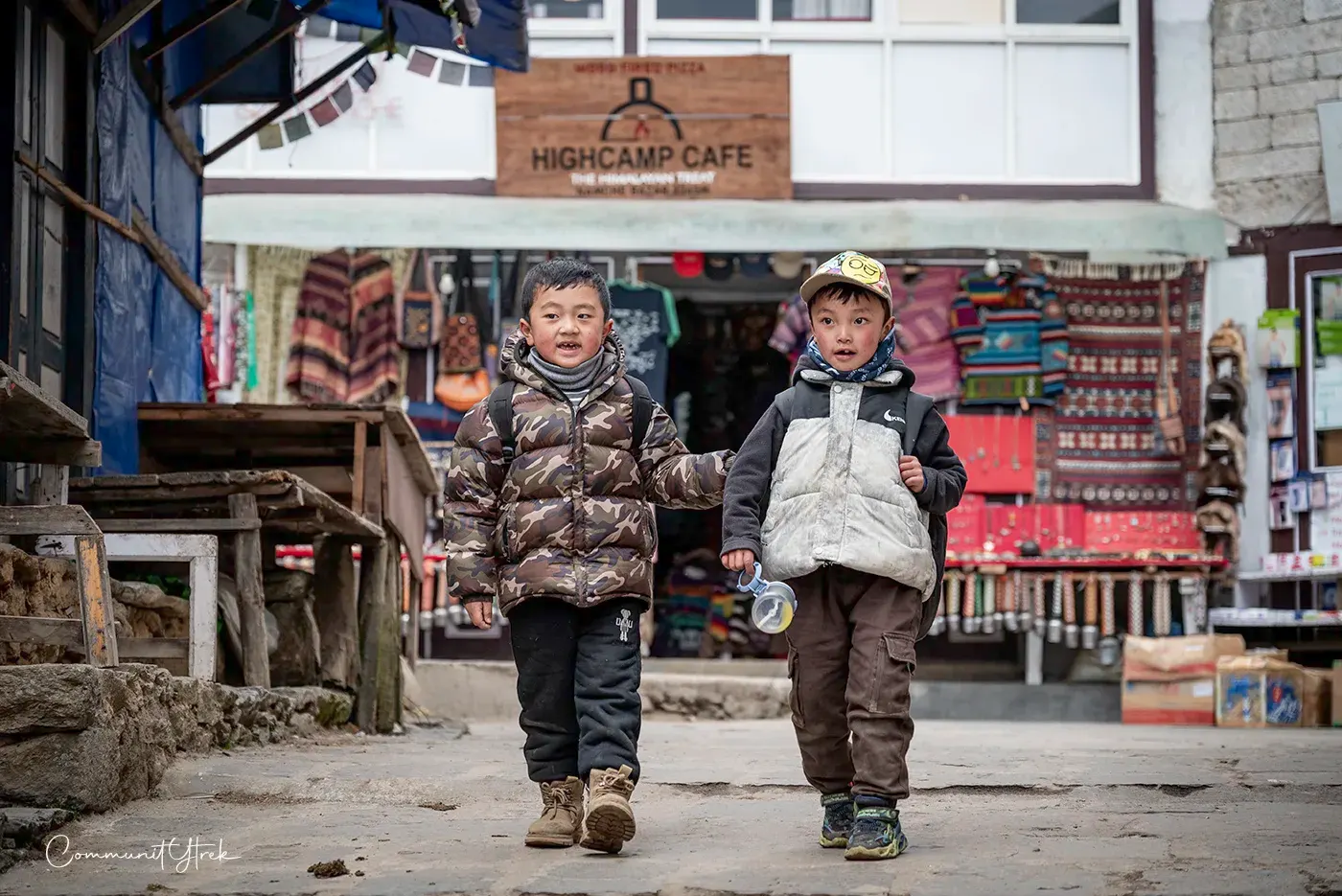
Sherpa culture gives the Everest trek a special character. In Namche Bazaar, you experience a lively mountain town where trekkers and local communities meet. Further up the valley, villages become quieter and the pace of life feels slower. At Tengboche, the famous monastery stands surrounded by enormous mountains, creating a powerful combination of spirituality and nature.
Travelling through the Khumbu is therefore not simply an opportunity to see Everest. It is an opportunity to learn about the people who have lived with these mountains for generations.
The Legacy of Tenzing Norgay and Edmund Hillary
The Everest story cannot be told without remembering Tenzing Norgay and Sir Edmund Hillary. Their successful ascent in 1953 changed mountaineering history, but Hillary's relationship with the Khumbu continued long after he came down from the mountain.
Through the Himalayan Trust, Hillary supported education, health care and infrastructure in the Everest region. His work helped establish schools and other facilities for local communities. The famous Hillary School at Khumjung and the hospital at nearby Khunde are important reminders of this connection.
For travellers, visiting Khumjung and Khunde adds another dimension to the Everest experience. You begin to understand that Everest history is not only about climbing records. It is also about relationships between the people who came to the mountains and the communities who have called the Himalayas home for generations.
Lukla: The Gateway to Everest
For most trekkers, the Everest adventure begins in Lukla. The small mountain town is home to Tenzing-Hillary Airport and has become one of the most famous gateways to the Himalayas.
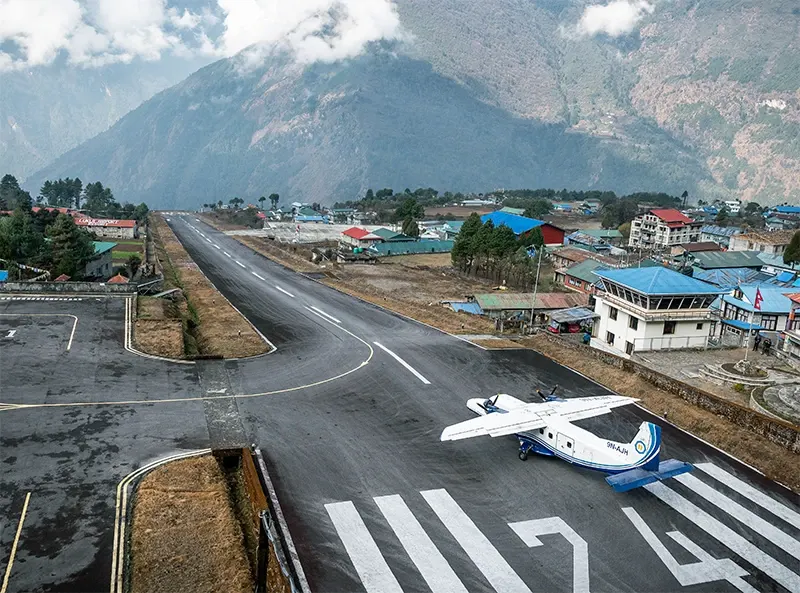
The flight into Lukla is itself an unforgettable experience. As the aircraft leaves Kathmandu or Ramechhap, the landscape changes from urban Kathmandu Valley scenery to green hills and rugged mountain terrain. Before long, the Himalayas begin to dominate the horizon.
After landing at Lukla, there is no need to rush. Take a breath, look around and enjoy the moment. The mountains are no longer something you are travelling toward from a distant city. You are finally inside the Himalayan landscape.
From Lukla, the journey continues on foot toward Phakding and then Namche Bazaar.
Why Do Lukla Flights Sometimes Operate From Manthali?
One of the most important practical questions for Everest trekkers is why their itinerary may show Manthali/Ramechhap Airport instead of Kathmandu.
During busy trekking seasons, Lukla flights may be shifted from Tribhuvan International Airport in Kathmandu to Ramechhap Airport at Manthali. The main reason is airport and air-traffic management. Kathmandu handles international flights and a large volume of domestic aviation, while moving Lukla operations to Manthali can help manage the high number of mountain flights during peak periods.
This means your journey may begin with a road trip from Kathmandu to Manthali before you board the small aircraft to Lukla. The road journey commonly takes several hours, depending on traffic, road conditions and weather.
Although this may initially feel inconvenient, it is simply part of the modern Everest travel experience. You leave Kathmandu before sunrise, travel through the hills toward Ramechhap and then continue by air into the Khumbu.
Flight operations can change according to season and aviation conditions, so travellers should always confirm their departure airport with their airline or trekking agency before travelling.
Manthali to Lukla Flight
The flight from Manthali to Lukla is short, often taking roughly 15–25 minutes under normal operating conditions. Yet those minutes can feel like the beginning of a completely different world.
Small aircraft fly toward the mountains and eventually arrive at Tenzing-Hillary Airport in Lukla. When you step onto the runway, the adventure becomes real.
There are no major highways from Lukla to Everest Base Camp. From this point onward, your main form of transportation is your own two feet.
The Road Connection to Everest
Travellers sometimes ask whether it is possible to reach the Everest region by road instead of flying to Lukla. Yes, road access has now made it possible to travel by vehicle from Kathmandu toward Lukla, providing an alternative to the traditional Kathmandu–Lukla flight. However, the journey is long and road conditions can still be challenging, particularly on the newer sections between Salleri and Lukla, where some parts of the road remain rough and unpaved. As road infrastructure continues to improve, travelling by road is expected to become more comfortable in the coming years.
For travellers who prefer the road option, the journey generally involves driving from Kathmandu to Salleri or Phaplu, staying overnight, and then continuing by road toward Lukla. From Lukla, you can begin the classic Everest Base Camp trekking route on foot. This option takes considerably longer than flying but can be useful for travellers who want to avoid potential flight disruptions or experience more of the lower Solukhumbu landscape.
Road travel can also be a practical alternative when Lukla flights are delayed or cancelled because of bad weather. Mountain weather can change quickly, and flights may sometimes be postponed for several days. From our own experience, trekkers can occasionally find themselves waiting in Lukla for a week or more when weather conditions prevent flights from operating. Having the road option provides greater flexibility and can help travellers continue their Everest adventure instead of waiting indefinitely for a flight.
Namche Bazaar: The Heart of the Khumbu
After leaving Lukla, one of the most memorable destinations is Namche Bazaar. Built on the slopes of a natural mountain amphitheatre, Namche is often described as the Sherpa capital of the Everest region.
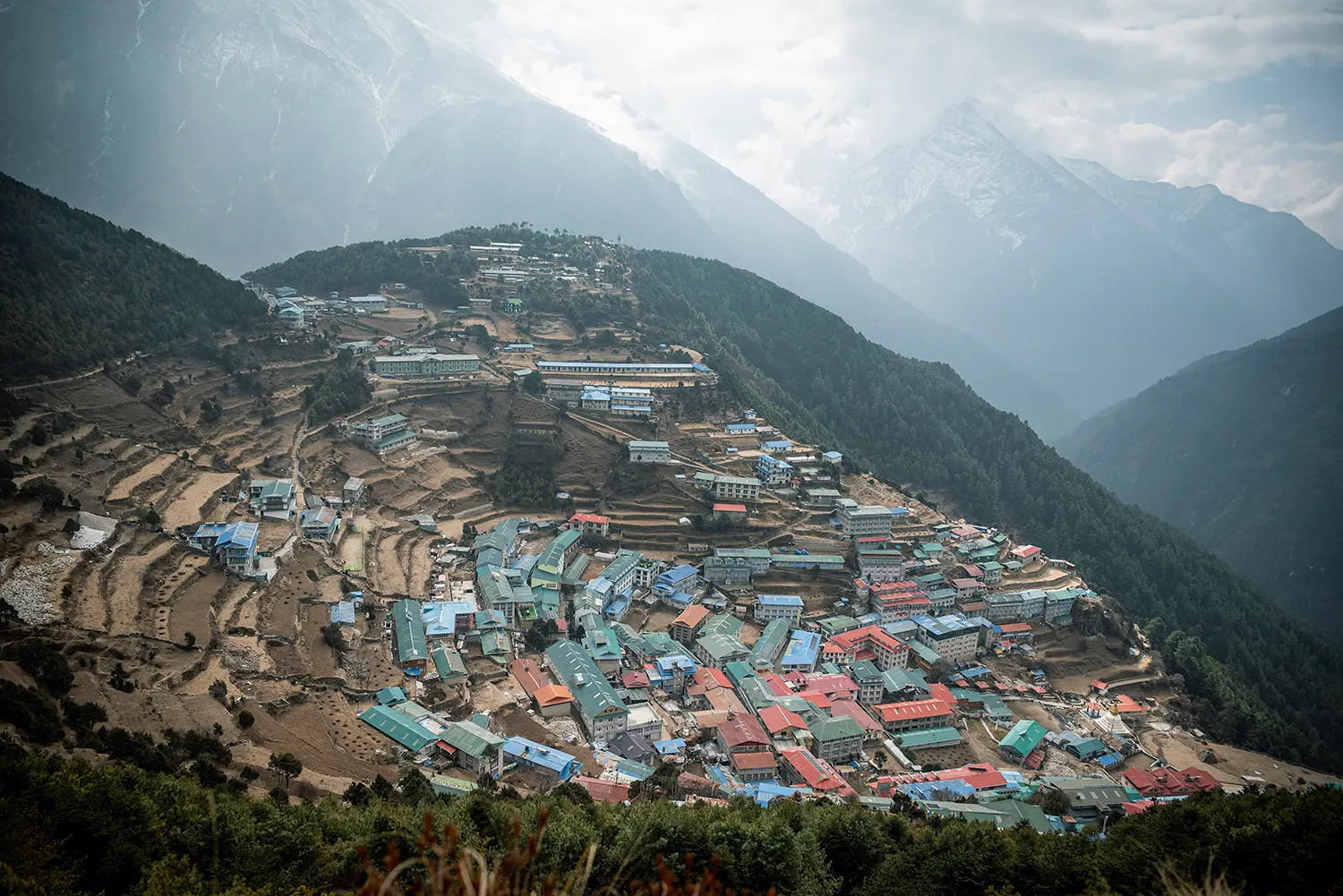
It is a place where the old and new Himalayas meet. Traditional mountain culture exists alongside bakeries, trekking shops, hotels, cafés and internet services. Trekkers from different countries gather here while porters and local residents continue their daily lives.
Namche is also an essential acclimatization stop. Instead of simply walking through, trekkers normally spend additional time here so their bodies can begin adapting to the increasing altitude.
From Namche, the mountains become increasingly impressive. Everest begins to appear between surrounding peaks, while Ama Dablam starts to dominate the landscape.
Tengboche Monastery
Further along the trail is Tengboche, one of the most important Buddhist centres in the Everest region.
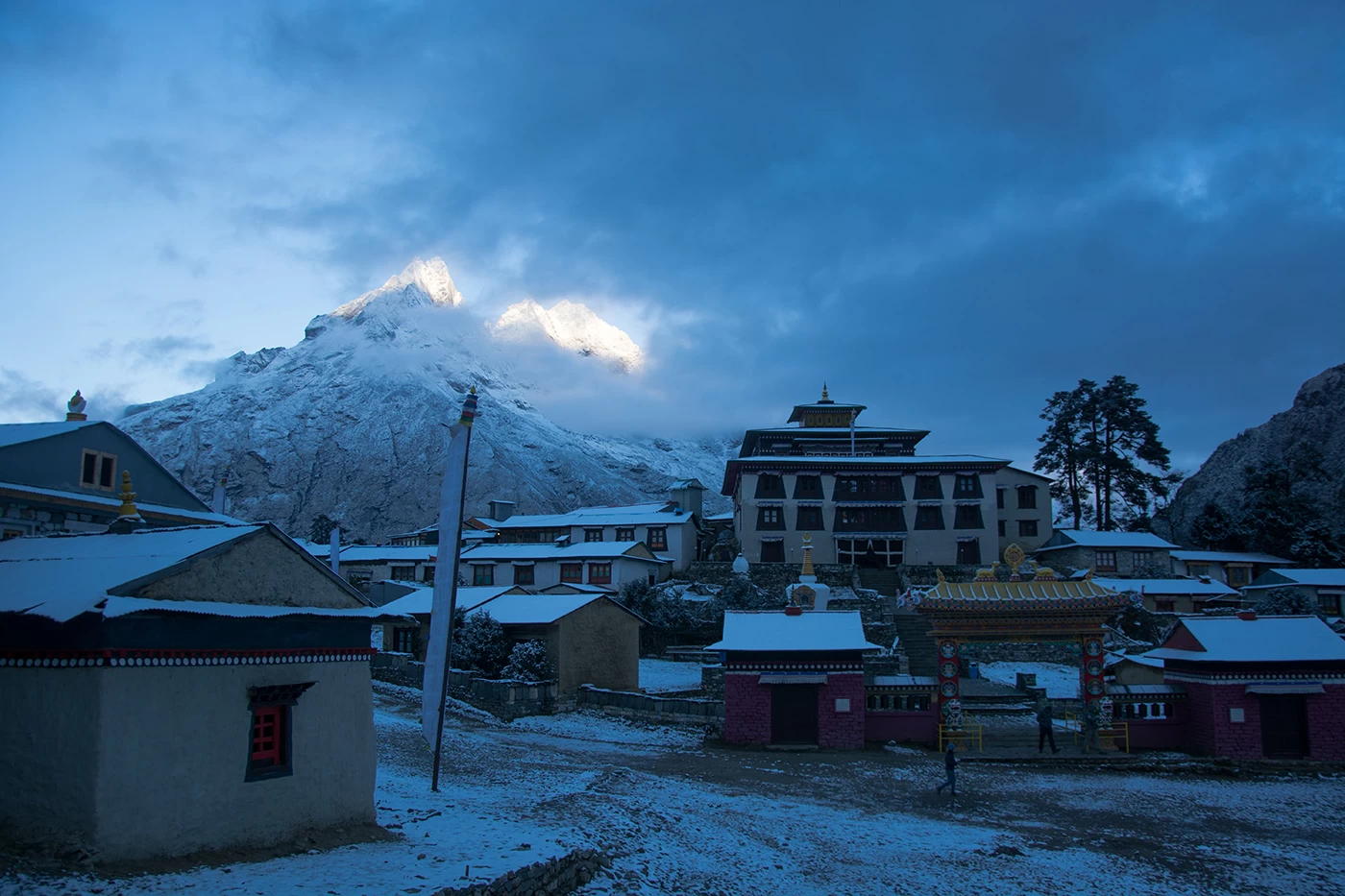
The monastery sits in an extraordinary Himalayan setting, surrounded by peaks including Ama Dablam, Everest and Lhotse. Prayer flags move in the wind while the mountains rise behind the monastery.
Tengboche is a reminder that the Everest region is not simply a destination for adventure. It is also a sacred cultural landscape where Buddhist traditions remain an important part of everyday life.
For many travellers, standing outside Tengboche Monastery and looking across the mountains becomes one of the quietest and most meaningful moments of the trek.
Dingboche and the High Himalayas
After Tengboche, the landscape begins to change. Forests gradually become thinner, the mountains appear closer and the air becomes noticeably colder and thinner.
The trail passes through Pangboche before reaching Dingboche, an important acclimatization village.
Dingboche is surrounded by impressive mountains and offers trekkers the opportunity to rest before continuing toward Lobuche and the Khumbu Glacier.
At this stage, the trek becomes more demanding. You are no longer simply walking through a mountain valley. You are entering a high-altitude environment where every step requires patience.
Lobuche, Gorak Shep and the Khumbu Glacier
From Dingboche, the trail continues toward Lobuche and then Gorak Shep.
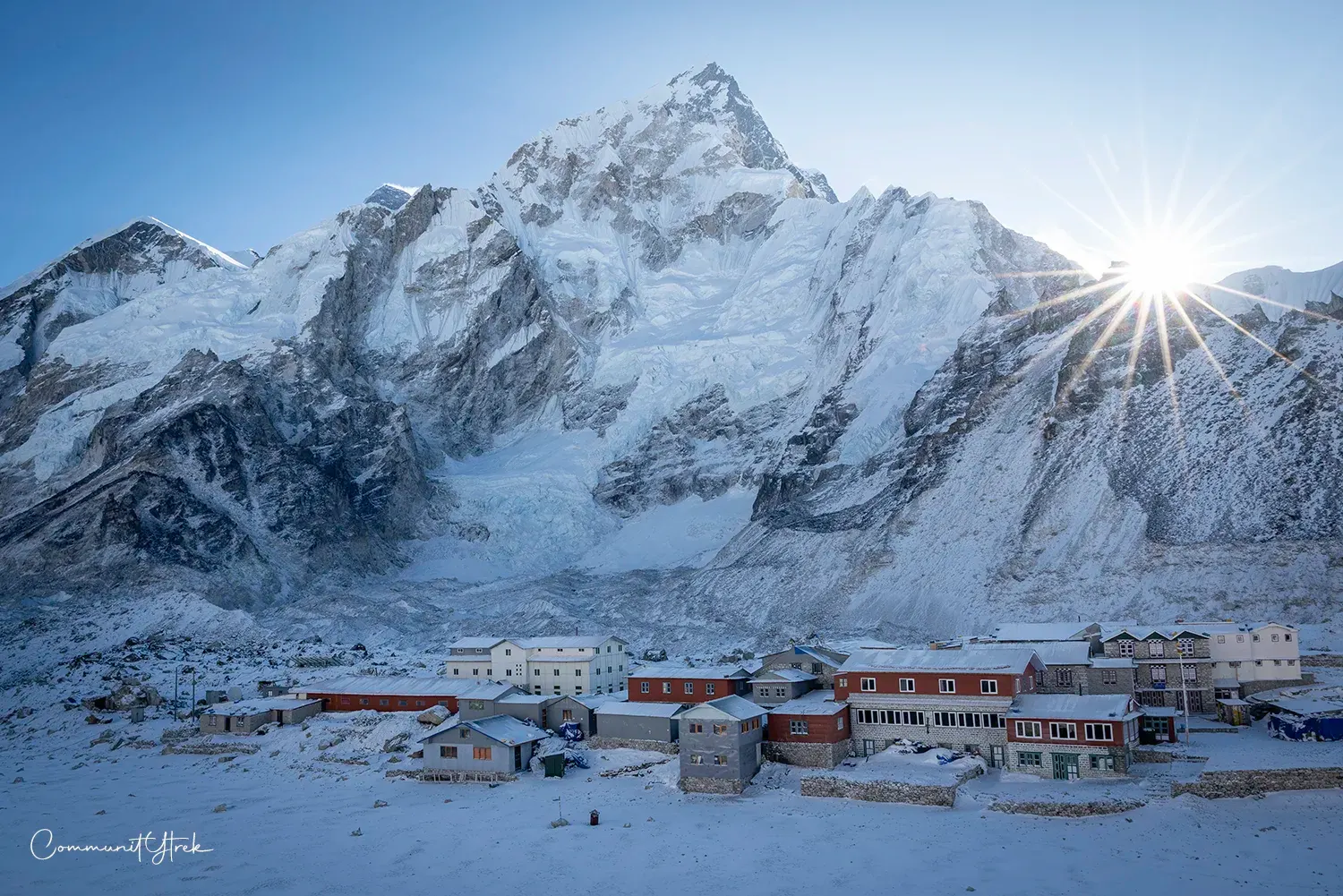
The landscape here is dramatically different from the green forests near Lukla. Trees have almost disappeared, and the surroundings are dominated by rock, ice, glaciers and towering Himalayan walls.
Gorak Shep is the final settlement on the classic route before Everest Base Camp and Kala Patthar. From here, trekkers usually make the final approach to Base Camp and return to Gorak Shep for the night.
Reaching Everest Base Camp
Eventually, after days of walking, the trail reaches Everest Base Camp.
There is no single moment that can completely explain what it feels like to arrive. You have spent days following a trail through villages and mountains, and suddenly you are standing beside the Khumbu Glacier at one of the most famous places in the Himalayas.
Everest Base Camp is approximately 5,364 metres above sea level. During the climbing season, expedition tents and equipment may be visible around the area. Outside the climbing season, the landscape can feel much quieter.
Take time to appreciate the achievement.
You are standing at the foot of the highest mountain in the world.
Sunrise and Sunset From Kala Patthar
Few moments on the Everest Base Camp Trek are as unforgettable as standing on Kala Patthar as the first light of day reaches the Himalayas. Most trekkers wake before sunrise, often while the mountains are still hidden in darkness, and begin the steep climb from Gorak Shep. The air is cold and thin, and every step feels harder at an altitude of around 5,545 metres. But with each step higher, the anticipation grows. You know that something extraordinary is waiting beyond the darkness.
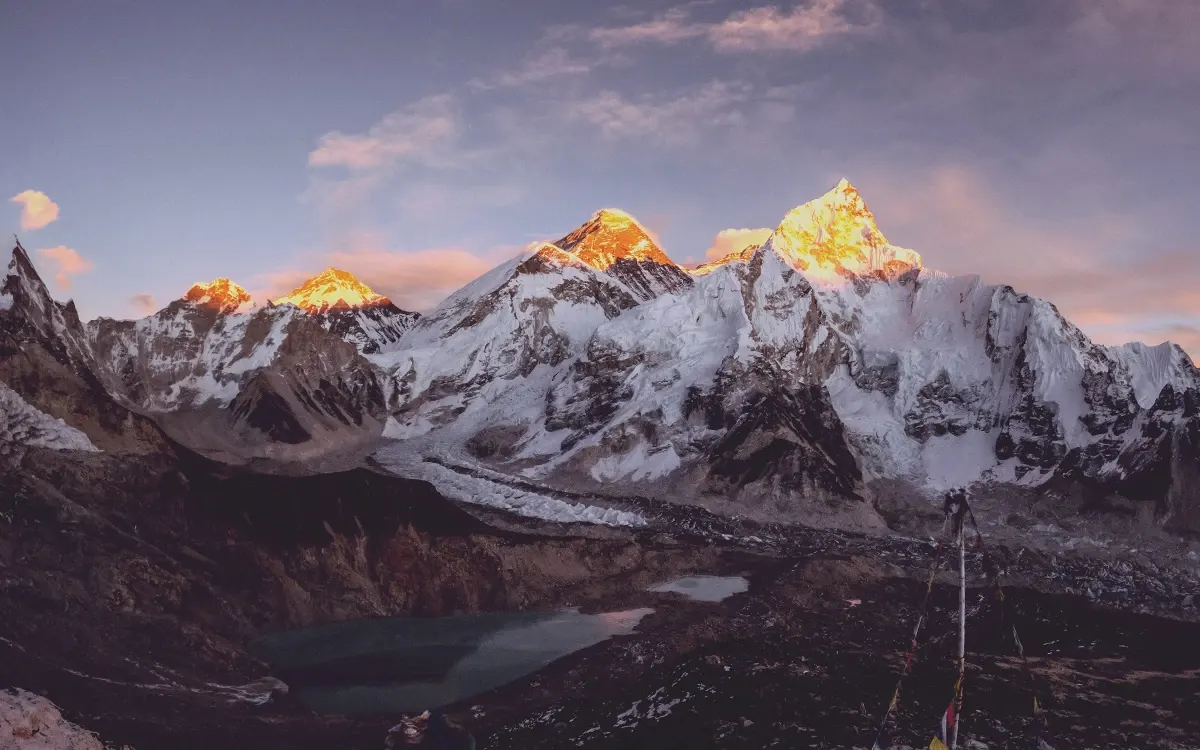
Then, slowly, the horizon begins to change. A soft glow appears behind the mountains, and the first golden rays of sunlight touch the highest peaks. Mount Everest gradually emerges above the surrounding ridges, while Nuptse, Pumori and Ama Dablam rise dramatically across the Himalayan skyline. The mountains change colour from deep blue and grey to golden orange before settling into brilliant white. For a few precious minutes, the entire landscape seems to glow.
The experience is not only about seeing Everest. It is about feeling the enormous scale and silence of the Himalayas. Standing on Kala Patthar, surrounded by some of the highest mountains on Earth, many trekkers find themselves forgetting the cold, exhaustion and difficult climbs of the previous days. All that remains is the mountain, the sunrise and the feeling that you have reached somewhere truly special.
Sunset from Kala Patthar can be equally magical. As the day comes to an end, the last light of the sun slowly moves across the Himalayan peaks. Everest, Nuptse and Pumori can take on warm shades of gold, pink and orange before the mountains disappear into the evening shadows. The changing light creates a completely different atmosphere from sunrise—quieter, softer and deeply peaceful.
For many travellers, this is when the meaning of the Everest Base Camp Trek becomes clear. Reaching Base Camp is an important achievement, but the journey is much bigger than one destination. It is the early mornings, the long mountain trails, the Sherpa villages, the prayer flags moving in the wind, the friendships made along the way and the moments when you stop simply to admire the mountains.
Kala Patthar does not just give you a view of Everest; it gives you a moment to appreciate the entire journey that brought you there.
What Makes the Everest Region So Attractive?
The Everest region has an extraordinary ability to combine different experiences.
You can spend one morning walking through a forest and later find yourself crossing a high suspension bridge above a rushing river. You can enter a Buddhist monastery in the afternoon and wake up the next morning surrounded by glaciers.
You meet Sherpa families, mountain guides, porters and travellers from around the world. You see prayer flags flying above villages and enormous mountains rising behind them.
The region also offers some of Nepal's most dramatic peaks, including Everest, Lhotse, Nuptse, Ama Dablam and Pumori.
That variety is one of the reasons travellers continue to return.
Everest Base Camp Trek Route
The classic route can be summarized simply:
| Day | Route | Approx. Altitude | Distance | Approx. Walking / Travel Time |
|---|---|---|---|---|
| 1 | Kathmandu → Lukla → Phakding | Kathmandu 1,400 m → Lukla 2,860 m → Phakding 2,610 m | 7–8 km trek | ✈️ Flight ~35 min + 3–4 hrs walk |
| 2 | Phakding → Namche Bazaar | 2,610 m → 3,440 m | 10–12 km | 5–6 hrs |
| 3 | Acclimatization Day in Namche | 3,440 m | 3–5 km optional hike | 3–4 hrs |
| 4 | Namche → Tengboche | 3,440 m → 3,860 m | 10–11 km | 5–6 hrs |
| 5 | Tengboche → Dingboche | 3,860 m → 4,410 m | 11–12 km | 5–6 hrs |
| 6 | Acclimatization Day in Dingboche | 4,410 m | 4–6 km optional hike | 3–4 hrs |
| 7 | Dingboche → Lobuche | 4,410 m → 4,910 m | 8–9 km | 4–5 hrs |
| 8 | Lobuche → Gorak Shep → Everest Base Camp → Gorak Shep | 4,910 m → 5,164 m → 5,364 m | 12–14 km | 7–9 hrs |
| 9 | Gorak Shep → Kala Patthar → Pheriche | 5,164 m → 5,545 m → 4,240 m | 12–14 km | 7–8 hrs |
| 10 | Pheriche → Namche Bazaar | 4,240 m → 3,440 m | 14–16 km | 6–7 hrs |
| 11 | Namche → Lukla | 3,440 m → 2,860 m | 18–20 km | 7–8 hrs |
| 12 | Lukla → Kathmandu | 2,860 m → 1,400 m | — | ✈️ 30–40 min flight |
Quick Route Overview
Kathmandu (1,400 m) → ✈️ Lukla (2,860 m) → Phakding (2,610 m) → Namche Bazaar (3,440 m) → Tengboche (3,860 m) → Dingboche (4,410 m) → Lobuche (4,910 m) → Gorak Shep (5,164 m) → Everest Base Camp (5,364 m) → Kala Patthar (5,545 m) → Namche → Lukla → ✈️ Kathmandu
A typical trek takes around 12–14 days, including acclimatization days. Travellers who want a slower journey, additional cultural exploration or an alternative approach can choose longer itineraries.
Best Time to Visit Everest Base Camp
| Season | Months | Weather & Visibility | Trail Conditions | Recommendation |
|---|---|---|---|---|
| 🌸 Spring | March–May | Clear skies, mild temperatures, excellent mountain views | Generally good; rhododendrons bloom | ⭐⭐⭐⭐⭐ Excellent |
| 🍂 Autumn | Late September–November | Clear skies, stable weather, outstanding visibility | Excellent | ⭐⭐⭐⭐⭐ Best Overall |
| ❄️ Winter | December–February | Very cold, but often clear | Snow and freezing temperatures possible | ⭐⭐⭐ For experienced trekkers |
| 🌧️ Monsoon | June–August | Cloudy, rainy, limited mountain views | Wet and potentially slippery | ⭐⭐ Less preferred |
Best Overall: Autumn — October to November
October and November are generally the most popular months for the Everest Base Camp Trek. After the monsoon, the atmosphere is often clear, the Himalayan peaks can be beautifully visible, and daytime trekking conditions are usually comfortable.
Spring, especially April and May, is another excellent choice. The lower trails become colourful with rhododendron flowers, temperatures are pleasant, and the Everest climbing season brings an exciting atmosphere to the Khumbu.
Why Choose Spring?
Spring is perfect for travellers who want to combine mountain views, comfortable trekking weather and beautiful Himalayan flowers. As you walk through the lower sections of the trail, rhododendron forests add colour to the landscape, while higher elevations reveal the spectacular snow-covered peaks.
Why Choose Autumn?
Autumn is ideal if your priority is clear mountain views and stable trekking conditions. October and November are particularly popular, so the trails and teahouses can be busy. However, the opportunity to see Everest, Ama Dablam, Lhotse and other Himalayan giants under clear skies makes the season extremely rewarding.
What About Winter?
Winter can be incredibly beautiful, especially for travellers who prefer quiet trails and snowy Himalayan landscapes. However, temperatures can become extremely cold at higher elevations, and snowfall can affect some sections of the route. Proper cold-weather equipment and flexibility are essential.
Can You Trek During Monsoon?
Yes, but June to August is generally less preferred for the classic Everest Base Camp Trek. Clouds, rain and changing weather can reduce mountain visibility and may affect Lukla flights. The landscape is greener, however, and there are significantly fewer trekkers.
For the best balance of weather, mountain views and trekking conditions, choose October–November. For beautiful flowers and the atmosphere of Everest's climbing season, choose April–May.
How Difficult Is the Everest Base Camp Trek?
The Everest Base Camp Trek is a challenging high-altitude trek rather than a technical climbing expedition.
You do not need mountaineering skills, but you need good physical preparation, patience and the ability to walk for several hours on consecutive days.
Altitude is the greatest challenge.
The best strategy is to walk slowly, stay hydrated, follow the acclimatization schedule and listen to your guide and your body.
Do not turn the trek into a race.
There is no prize for reaching Base Camp one day earlier.
The mountains will still be there tomorrow.
Where Do Trekkers Stay?
Accommodation on the Everest Base Camp Trek ranges from simple traditional teahouses to comfortable and more luxurious mountain lodges, so travellers can choose according to their budget, comfort level and trekking style. In places such as Lukla, Phakding, Namche Bazaar and Tengboche, you can find a wider choice of accommodation, including comfortable hotels and upgraded lodges with better facilities. Some properties, such as Yeti Home and mountain lodges, offer a more comfortable stay for travellers who prefer additional facilities after a long day on the trail.
As you climb higher toward Dingboche and beyond, accommodation gradually becomes more basic because of the remote environment and difficult transportation of supplies. Up to Dingboche, it is still possible to find relatively comfortable rooms, and some lodges may offer attached or private bathrooms depending on the property and availability. However, once you continue toward Lobuche and Gorak Shep, accommodation becomes noticeably simpler. Rooms are generally basic, bathrooms are often shared, and facilities may include simple twin rooms, shared dining areas and limited hot water or charging facilities.
This change in accommodation is an important part of the Everest experience. The higher you travel, the more you leave modern comforts behind and experience the simplicity of life in the high Himalayas. Whether you choose a comfortable lodge or a basic teahouse, the warm hospitality, mountain scenery and peaceful evenings around the dining room make staying overnight in the Khumbu a memorable part of the journey.
Food Along the Everest Trail
Food on the Everest Base Camp Trek is much more varied than many first-time trekkers expect.
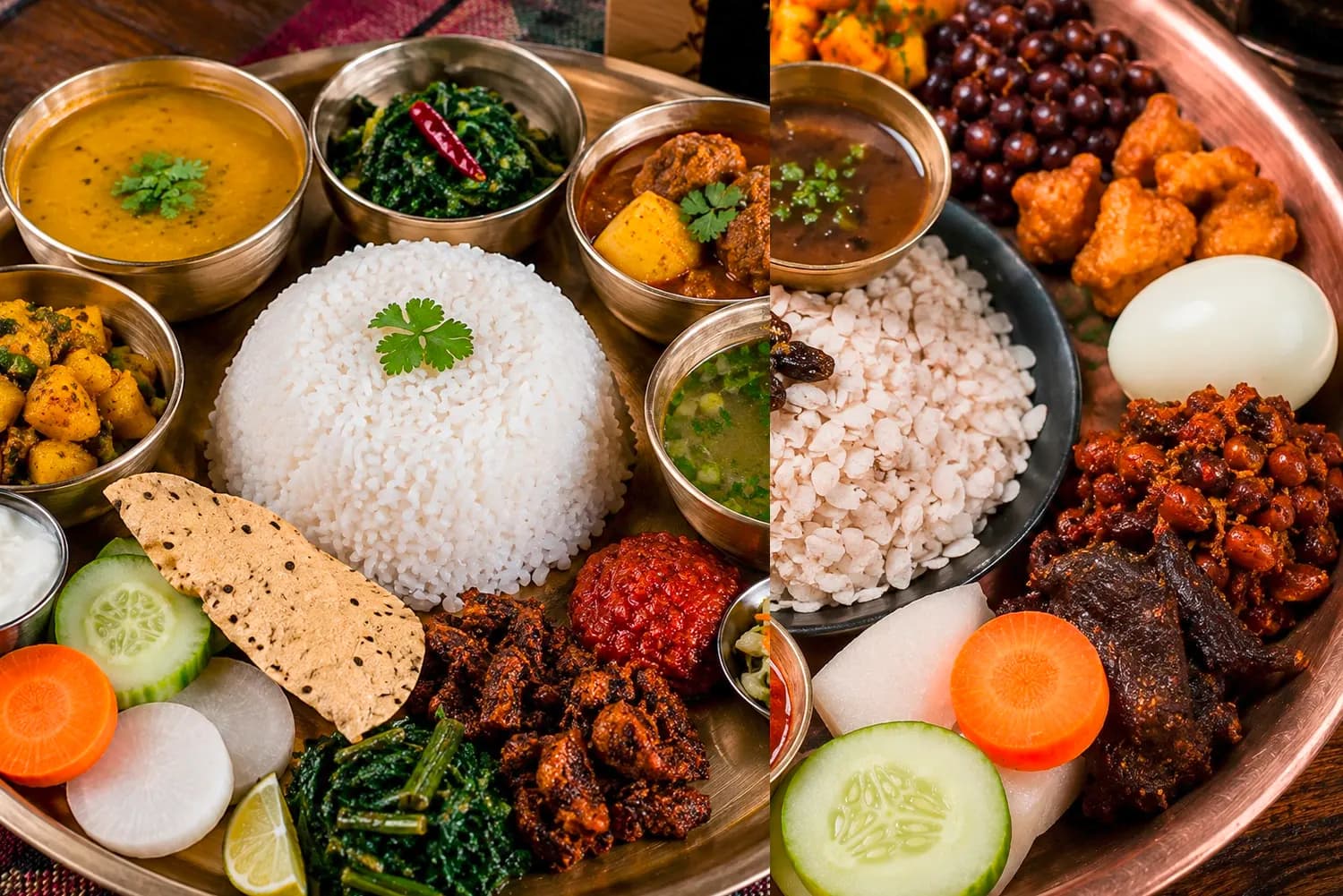
You can find traditional Nepali dal bhat, Tibetan-style bread, momos, noodles, fried rice, soups, potatoes, eggs, pancakes, pasta and other meals.
Dal bhat remains a favourite because it is filling and provides the energy needed for long trekking days.
At higher elevations, food prices increase because supplies must be transported into remote mountain settlements.
But eating a hot meal while watching the Himalayan sunset outside a teahouse window is an experience worth remembering.
Travel Responsibly in the Everest Region
The Everest region is one of the most beautiful places on Earth, but it is also an environmentally and culturally fragile Himalayan landscape that deserves care and respect. As a traveller, you can help protect its natural beauty by carrying a reusable water bottle, reducing single-use plastic, staying on established trails and taking all your rubbish with you. Small choices made by thousands of trekkers can make a meaningful difference in protecting the mountains for future generations.
Respect for local culture is equally important. The Khumbu is home to the Sherpa people and has a deep Buddhist heritage, so travellers should treat monasteries, chortens, mani walls, prayer flags and other sacred places with care. Before taking photographs of local people, monks or religious ceremonies, it is always thoughtful to ask for permission. Travel slowly, listen to local advice and remember that you are a guest in their homeland.
Most importantly, the Khumbu should never be seen simply as a tourist attraction. It is the home of the Sherpa people, a sacred Himalayan landscape, a protected national park and one of the world's most extraordinary mountain environments. When we travel with respect, we do more than enjoy Everest—we help preserve its beauty, culture and spirit for the travellers and communities who will experience it in the future.
Why You Should Visit Everest Base Camp
You should visit Everest Base Camp if you are looking for more than an ordinary holiday. This is a journey for travellers who want to challenge themselves, walk beneath some of the highest mountains on Earth and experience the unique beauty and culture of the Himalayas. Along the trail, you will discover warm Sherpa hospitality, traditional mountain villages, ancient Buddhist monasteries and spectacular landscapes shaped by glaciers, rivers and towering peaks. You will also follow a legendary trail connected with generations of explorers, mountaineers, guides and local communities who have made the Everest region part of the world's adventure history.
The Everest Base Camp Trek is not an easy journey, and that is part of what makes it so rewarding. There will be freezing mornings, long uphill climbs, tired legs and moments when the thin mountain air makes every step feel difficult. Flights to and from Lukla can also be affected by changing mountain weather, so patience and flexibility are essential. There may even be moments when you stop and wonder why you decided to take on such a challenging adventure.
Then, suddenly, you look up.
Ama Dablam rises dramatically above the valley. Everest appears beyond the surrounding peaks. Colourful prayer flags move gently in the Himalayan wind, while the mountains stretch endlessly toward the horizon. In that moment, the cold, exhaustion and difficult climbs seem to fade away, and you understand why thousands of travellers dream of making this journey.
Everest Base Camp is not simply a place you reach. It is an experience you carry home with you. The memories of the trail, the people you meet, the mountains you see and the challenge you overcome can stay with you long after you have returned from Nepal.
Final Inspiration
The Everest Base Camp Trek is often described as a journey to the foot of the world's highest mountain, but the deeper you travel into the Khumbu, the more you realize that Everest is only one part of the story. The true beauty of this journey lies in everything you experience along the way—the people you meet, the Sherpa villages tucked beneath towering peaks, the ancient Buddhist monasteries, the rushing Himalayan rivers and the suspension bridges decorated with colourful prayer flags.
It is found in the quiet mornings when the mountains slowly appear through the clouds, in the warmth of a cup of tea after hours of walking and in the laughter shared with fellow trekkers inside a mountain teahouse. It is also in the history of the trail, following in the footsteps of legendary mountaineers such as Tenzing Norgay and Sir Edmund Hillary, whose historic journey helped introduce the Everest region to the world.
And then comes the moment you have been walking toward. After days of climbing, descending and crossing the Himalayan landscape, you finally stand at Everest Base Camp. The mountain world you once knew only through photographs is no longer distant it is right in front of you. You look around at the glaciers, peaks and enormous Himalayan landscape, and suddenly understand that the greatest achievement was never simply reaching Base Camp.
The greatest achievement was making the journey there.